Intel unveils 480GB D-series GPU for AI workloads
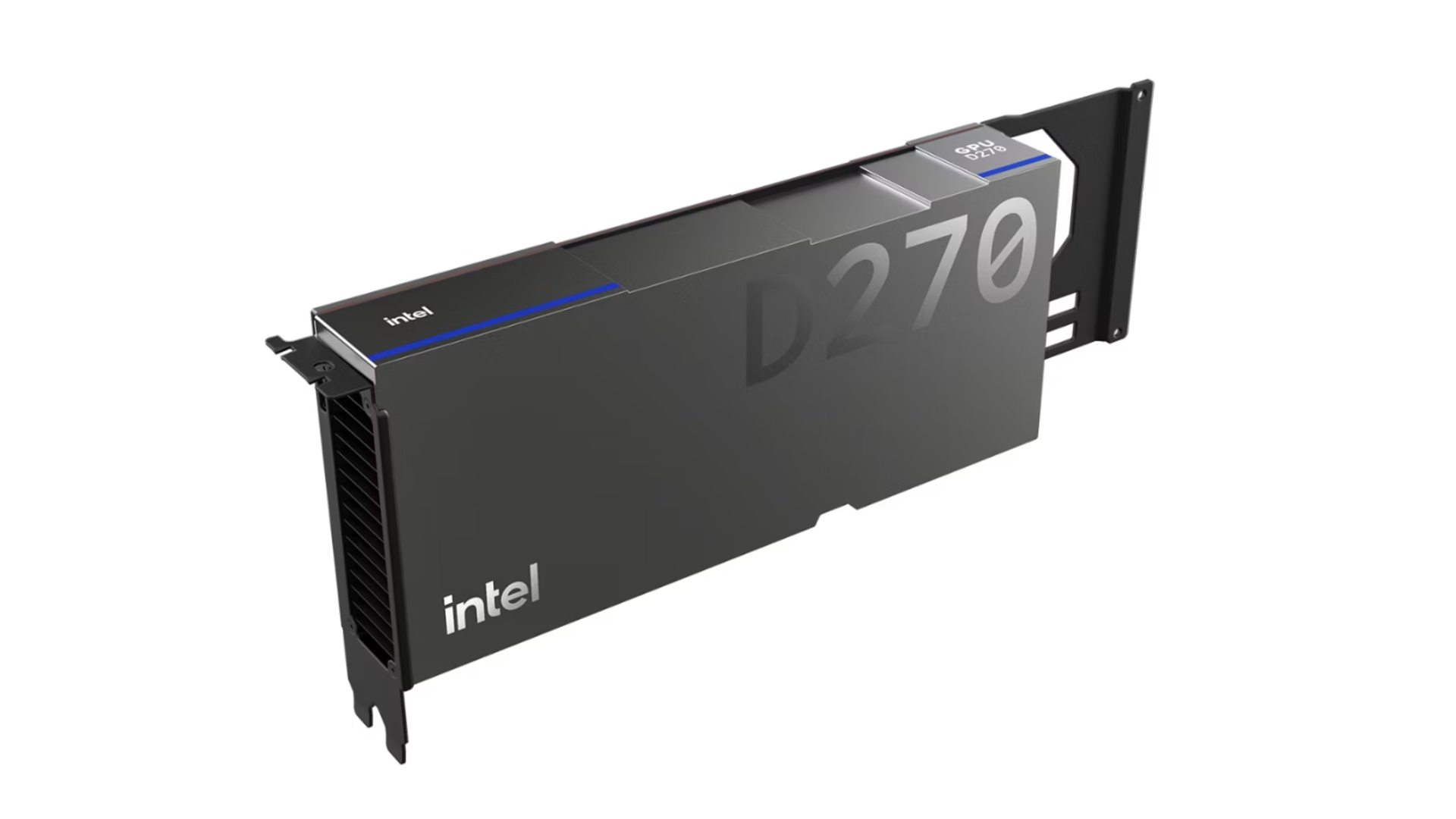
Intel has introduced its D-series GPU with 480GB of LPDDR5X memory, surpassing Nvidia's capacity. This advancement is tailored for demanding AI inference tasks.
Intel has announced its new D-series GPU, setting a memory record with 480GB of LPDDR5X. This model, previously known as Crescent Island, is specifically designed to meet the demands of artificial intelligence inference, meaning it can handle complex models with up to 300 billion parameters.
Intel's D-series has surpassed Nvidia's Blackwell Ultra B300 GPU, which featured 288GB of HBM3e memory, thus positioning itself as the data center GPU with the highest memory capacity in the market. This development marks a significant step in the competition between tech giants in the realm of artificial intelligence and data processing.
Unlike what one might expect from a modern graphics card, Intel has chosen LPDDR5X instead of GDDR7, a choice that may seem unusual at first glance. This type of memory is more commonly found in laptops and mobile devices, suggesting that Intel is prioritizing energy efficiency and performance over sheer speed.
## Why it matters This development is crucial not only for data centers but also for any industry relying on artificial intelligence. The ability to handle larger and more complex models could lead to significant advances in AI research and practical applications.
Furthermore, Intel's decision to use LPDDR5X might signal a shift in how companies approach hardware design for AI applications, prioritizing efficiency over maximum speed.
## What we know Intel has confirmed that its D-series GPU will feature a memory capacity of 480GB and is designed for AI workloads. It is also known to support models of up to 300 billion parameters, making it a powerful tool for developers and researchers.
## What remains unclear The full performance specifications of the D-series and its commercial availability have not yet been detailed. It is also unclear how LPDDR5X will compare to GDDR7 in practical AI applications.
Read at the original source:
TechRadar →Related news
 Tech Business
First impressions of Final Fantasy VII Revelation
The Final Fantasy VII Revelation demo provides a glimpse into the story and new characters.
 Tech Business
Should you limit your FPS in games? Here's what to know
Limiting FPS can enhance your gaming experience. We explain when and why it's advisable to do so.
 Tech Business
Video game ownership bill introduced in Congress
The 'Power To The Players Act' aims to ensure consumers own the games they purchase. This could change how players interact with their games.