Microsoft Maia 300: new AI engine prioritizes memory bandwidth

Microsoft is developing the Maia 300, its new AI engine that prioritizes memory bandwidth over raw computing power. This strategy could change the chip industry landscape.
Microsoft has announced that the Maia 300 will become its main inference engine at scale, moving towards an in-house silicon strategy similar to that adopted by Google and Amazon. This new chip promises a 2.5-fold increase in memory bandwidth compared to its predecessor, the Maia 200, although with a more modest 36% compute gain. Production is slated to start in 2027.
## Why it matters This decision by Microsoft not only reflects a strategic shift towards self-sufficiency in hardware development but could significantly impact companies like Nvidia, which currently dominates the AI chip market. With hyperscalers like Microsoft seeking to reduce reliance on external suppliers, Nvidia's business model may be at risk.
## What we know Microsoft has indicated that this transition to internally designed chips is driven by the need to improve efficiency in data processing, a critical area for AI applications. In 2024, the company had already pointed out that Google was the only player with complete vertical integration across all AI layers, highlighting the importance of this strategy to compete in the sector.
## What remains unclear Specific details on how the Maia 300 will perform compared to Nvidia's chips or how it will affect their market pricing have yet to be provided. Additionally, the overall sustainability of the chip industry as more companies opt for in-house silicon remains an open question.
Read at the original source:
TechRadar →Related news
 Artificial Intelligence
Replit switches AI provider from Anthropic to OpenAI
Replit has announced it will no longer work with Anthropic and will switch to OpenAI as its default model provider.
 Artificial Intelligence
Google opens access to AI model Gemini 4 Argon after restrictions
Google has launched its AI model Gemini 4 Argon to the public after a period of restricted access. This decision aims to balance innovation with security in the use of advanced technologies.
 Artificial Intelligence
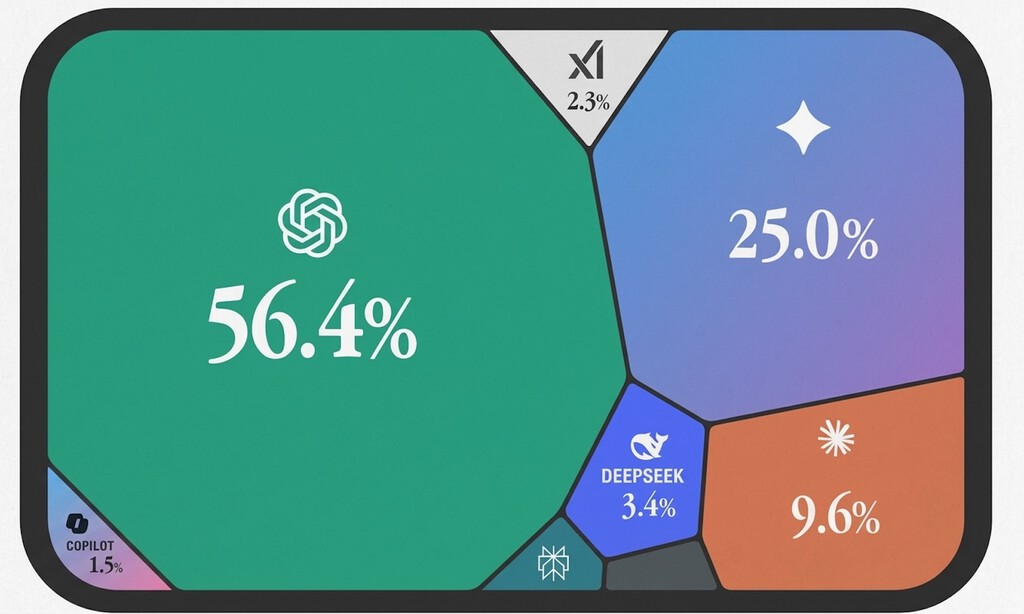
ChatGPT's Lead Diminishes: The Changing AI Landscape
ChatGPT remains the leader in AI, but its position is being challenged by increasing competition over the past year.