SpaceX's Starship achieves first orbital launch
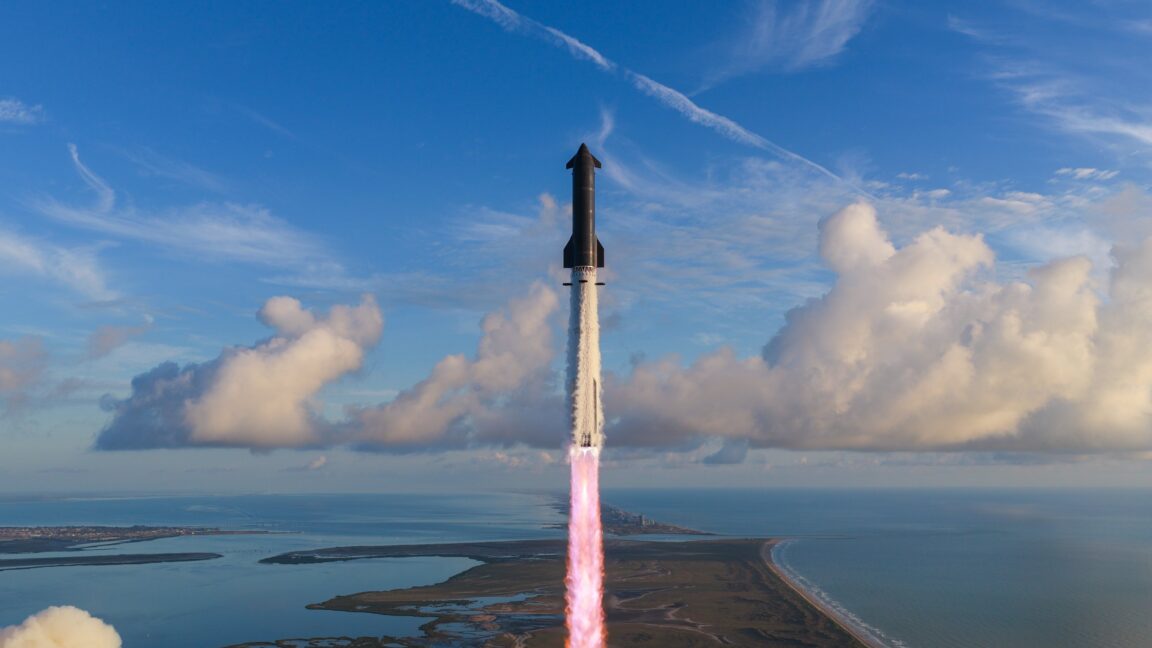
SpaceX successfully completed its 14th test flight of the Starship rocket, reaching Earth orbit. During this flight, 26 new Starlink satellites were deployed.
SpaceX's Starship rocket thundered into the sky over South Texas in a significant milestone for the company. This launch marks the 14th test of this powerful vehicle, but for the first time, it reached orbital velocity, an important advancement in the spacecraft's capabilities. In previous flights, SpaceX had chosen to limit the rocket's performance to conduct suborbital trajectories, ensuring a controlled reentry into Earth's atmosphere.
## Why it matters This success not only demonstrates SpaceX's ability to conduct orbital launches but also enables the deployment of the next generation of Starlink satellites. With 26 new satellites in orbit, SpaceX is one step closer to expanding its high-speed internet network globally, which could improve connectivity in remote and rural areas.
## What we know The launch was successfully executed and marked a shift in SpaceX's strategy, as they now feel confident to carry out full orbital flights. The deployed Starlink satellites are part of the latest generation, designed to provide better service and increased capacity.
## What remains unclear It is still unconfirmed how these new satellites will affect the coverage and performance of the existing Starlink network. Additionally, the company has not detailed plans for future orbital missions or how many more satellites they expect to launch in the coming months.
Read at the original source:
Ars Technica →Related news
 Science
Pentagon seeks new spaceport by 2030 amid rising launch demand
The U.S. Space Force aims to establish a new spaceport within four years, but details of its location and land acquisition remain unresolved.
 Science
How to overcome stagnation in your workout
Professor Paul Hough explains how to manage workout stagnation. Understanding causes and solutions can prevent frustration.
 Science
Nvidia hits quantum computing milestone with fewer qubits
Nvidia has simulated a 104-qubit quantum computing system using 90% fewer physical qubits. This breakthrough could revolutionize drug discovery and financial modeling.