30 Years of Submarine Cables: The History of Internet Beneath the Sea
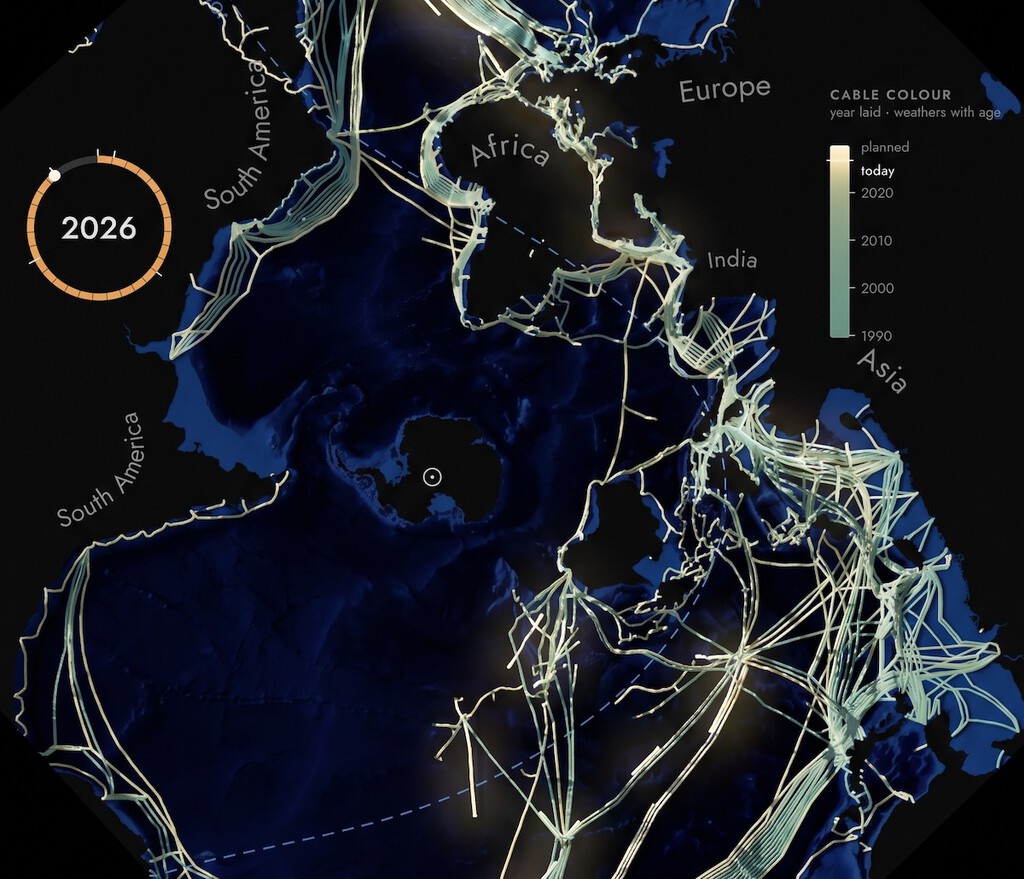
A new video celebrates three decades of submarine cables that support the Internet. These invisible threads are essential for global connectivity.
In a fascinating 30-year journey, a new video showcases the evolution of submarine cables that have woven the infrastructure of the Internet. Since 1999, these invisible threads have been fundamental to international data traffic, with an astonishing 99% of information circulating beneath the oceans. This phenomenon, which seems to contradict the idea of a wireless Internet, is actually the backbone of our global connectivity.
Why it Matters
The importance of submarine cables lies in the fact that they are the primary medium through which information is transmitted between continents. Without them, the experience of browsing the web, sending emails, or making video calls would be nearly impossible. This deployment of cables has not only enabled greater speed and capacity but has also facilitated the expansion of Internet access in remote areas.
What We Know
According to United Nations data, the network of submarine cables has grown exponentially, from just a few in the 2000s to 694 cables today, according to TeleGeography's map. This growth is a testament to the increasing demand for connectivity and the evolution of technology. Additionally, there is an interactive map that allows users to explore the location of these cables and future projects.
What Is Still Unclear
Despite the abundance of information about the current infrastructure, specific plans for the future expansion of these cables have not yet been detailed. The tech community anticipates that more projects will be developed to meet the growing demand for data, but details about implementation and costs remain uncertain.
Read at the original source:
Xataka →Related news
 Internet & Web
Google to use Gmail and Photos data for personalized ads
Google will start using Gmail and Photos data to target personalized ads. This will apply if the Personal Intelligence feature is enabled, with no option to opt-out.
 Internet & Web
Google updates privacy policy for personalized ads use
Google has revised its privacy policy to allow the use of Gmail and Photos data for personalized ads. This raises concerns about user privacy.
 Internet & Web
Google Home Speaker Is Using More Wi-Fi Data Than Expected
A user discovered that their Google Home Speaker was consuming more data than all other devices combined. This issue extends to other smart home devices as well.