3D-printed airless wheels: a game changer for Ukraine's robots
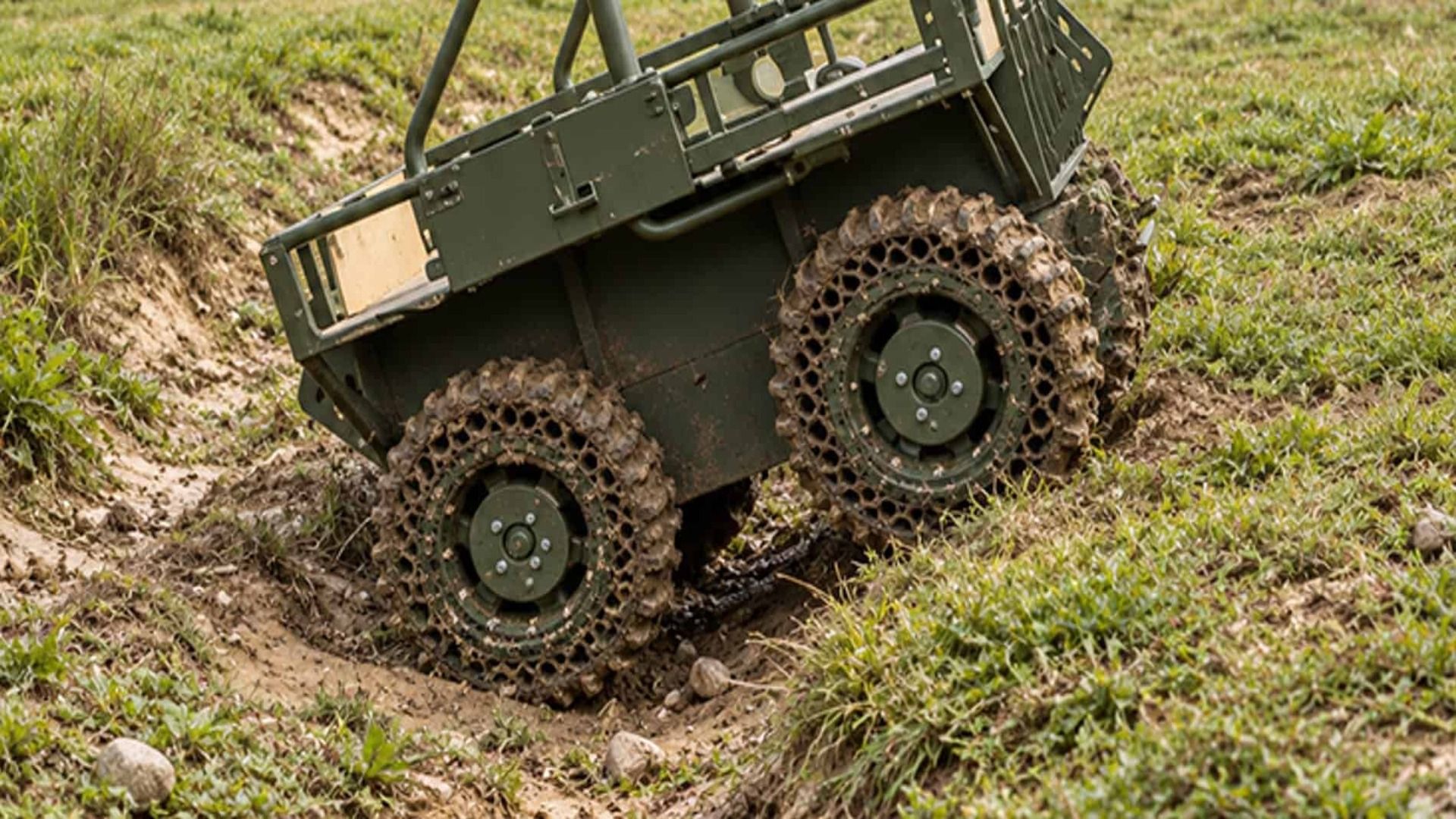
Ukrainian engineers unveil airless wheels for robotic vehicles. This innovation enhances battlefield mobility even after sustaining damage.
Recently, engineers in Ukraine have developed airless wheels for robotic vehicles operating in the battlefield. These innovative wheels, produced using 3D printing technology, eliminate the need for inflation, making them ideal for maintaining vehicle mobility under adverse conditions.
The development team, including Print&Live UA and iSCALE 3D, has conducted combat trials and field evaluations with these new wheel designs. Weighing between 32 and 56 kg, these ultralight wheels are designed with a closed profile and a rounded tread, enhancing their resistance to punctures and explosions.
The lightweight construction of these wheels addresses mobility risks on the battlefield, increasing the ability of robotic vehicles to traverse difficult terrain. This not only improves energy efficiency but also the maintainability of these units on the front lines, where every second counts.
## Why it matters This innovation could change the game for robotic vehicles in conflict, allowing them to operate more effectively in hostile environments. The ability to continue functioning despite significant damage is crucial in combat situations, where mobility can be a decisive factor in operational success.
## What we know Combat trials have demonstrated the effectiveness of these wheels in real conditions, suggesting they have great potential for implementation in various military and rescue applications. Moreover, the 3D printing technology used for their manufacture could pave the way for faster and more efficient production of critical components in the future.
## What remains unclear It has yet to be confirmed what overall impact these wheels could have on large-scale operations or if mass production is planned. Additionally, it is unknown whether other civilian applications for this innovative technology will be explored.
Read at the original source:
TechRadar →Related news
 Science
The bottleneck in scientific research is monkeys
China faces a critical shortage of monkeys for scientific research, impacting the development of treatments and medications.
 Science
Connection Between 2026 Super El Niño and Climate Change
The 2026 Super El Niño is emerging on a record-hot planet. Scientists are exploring its implications.
 Science
California's iconic redwoods are suffering from heatstroke
A new study reveals that California's redwoods slow down photosynthesis as temperatures rise. This poses serious implications for their future.